The Complete Guide to CCTV in Kenya: Everything You Need to Know for 2026.
Why CCTV is Essential for Every Kenyan Property in 2026.
Security in Kenya is evolving rapidly. By 2026, intelligent surveillance will form a fundamental layer of protection for any home or business. Considering the increasing sophistication of threats, solutions must now be smarter and more proactive. Fundamentally, a modern CCTV system has evolved beyond simple recording into a tool for active deterrence, real-time intelligence, and seamless daily integration. At Ritto Technologies, we understand the unique security landscape across Nairobi, Mombasa, Kisumu, and all counties. Consequently, this guide provides a comprehensive overview for choosing, installing, and benefiting from a CCTV system in Kenya for 2026 and beyond.
Understanding Modern CCTV: Core Concepts for Kenyan Users.
What is a CCTV System in 2026?
CCTV, or Closed-Circuit Television, is a private video network. Specifically, cameras transmit signals to designated monitors and recorders, creating a “closed” circuit viewable only by authorized users. By 2026, this technology will act as an intelligent security partner designed to deter crime, provide crucial evidence, monitor operations, and deliver unparalleled peace of mind 24/7.
The Legal Framework: CCTV and Kenya’s Data Protection Act.
Compliance with local laws is non-negotiable. Therefore, all installations must strictly adhere to the Data Protection Act of 2019. Ritto Technologies ensures full legal compliance for every project, managing key requirements such as notifying individuals in surveilled common areas, avoiding private spaces like bathrooms, and securing recorded footage responsibly. Ultimately, we handle these complexities so you can focus solely on enhanced security.
The 2026 CCTV Landscape in Kenya: Technology and Trends.
IP Systems as the Universal Standard.
For any 2026 installation, IP (Internet Protocol) systems are the unequivocal recommendation. They offer superior clarity, advanced analytics, and seamless integration compared to outdated analog systems. For instance, IP cameras send digital video over network cables and support Power over Ethernet (PoE), meaning one cable provides both power and data. This design dramatically simplifies installation and improves reliability, particularly in areas with inconsistent grid power.
Key Features Defining 2026 Systems.
Several critical features will define top-tier systems in 2026. Firstly, High-Resolution Imaging with 4K (8MP) cameras will be standard for clear identification. Secondly, Artificial Intelligence (AI) will allow cameras to distinguish between humans, vehicles, and animals, thereby reducing false alarms. Additionally, Color Night Vision will provide full-color video in low light using advanced sensors. Furthermore, Two-Way Audio enables communication through the camera, while Cloud and Local Hybrid Storage ensures footage is backed up both on-site and securely online.
The Rise of Integrated Security Ecosystems.
In 2026, a standalone CCTV camera will be insufficient. Instead, the most effective systems will be fully integrated ecosystems. Imagine your cameras connecting with your alarm system, access control, smart lighting, and mobile device. When an alarm triggers, for example, cameras can automatically focus on the event, begin recording, and send a live feed to your phone. For this reason, Ritto Technologies specializes in building these connected security environments for Kenyan homes and businesses.
Choosing the Right System for Your Kenyan Property.
For Urban Homes and Apartments.
A typical urban home will optimally require 4 to 8 cameras covering the main gate, front door, backyard, and driveway. We generally recommend discreet dome cameras with AI human detection to minimize alerts from passing animals. Additionally, a Network Video Recorder (NVR) with at least 2TB of storage ensures 30 days of footage, while mobile app access remains essential for remote monitoring.
For Retail Shops and Businesses.
Retail security demands a multi-layered approach. Therefore, use dome cameras at till points, bullet cameras with strong lighting for entrances, and consider an ANPR (Automatic Number Plate Recognition) camera for the parking lot. Moreover, integrating a fog security system provides the ultimate physical deterrent against robbery. Consequently, a PoE switch system is recommended for easy future expansion.
For Large Compounds, Farms, and Rural Properties.
These properties face unique challenges like perimeter security and unreliable power. In response, solar-powered CCTV towers with wireless bridges are ideal. Similarly, long-range thermal cameras can monitor fences day and night. Finally, a central monitoring setup with a large-screen monitor provides constant oversight. As a result, Ritto Technologies designs custom off-grid solutions that work reliably anywhere in Kenya.
Professional Installation: Why It Matters in 2026.
The Risks of DIY and Cheap Installers.
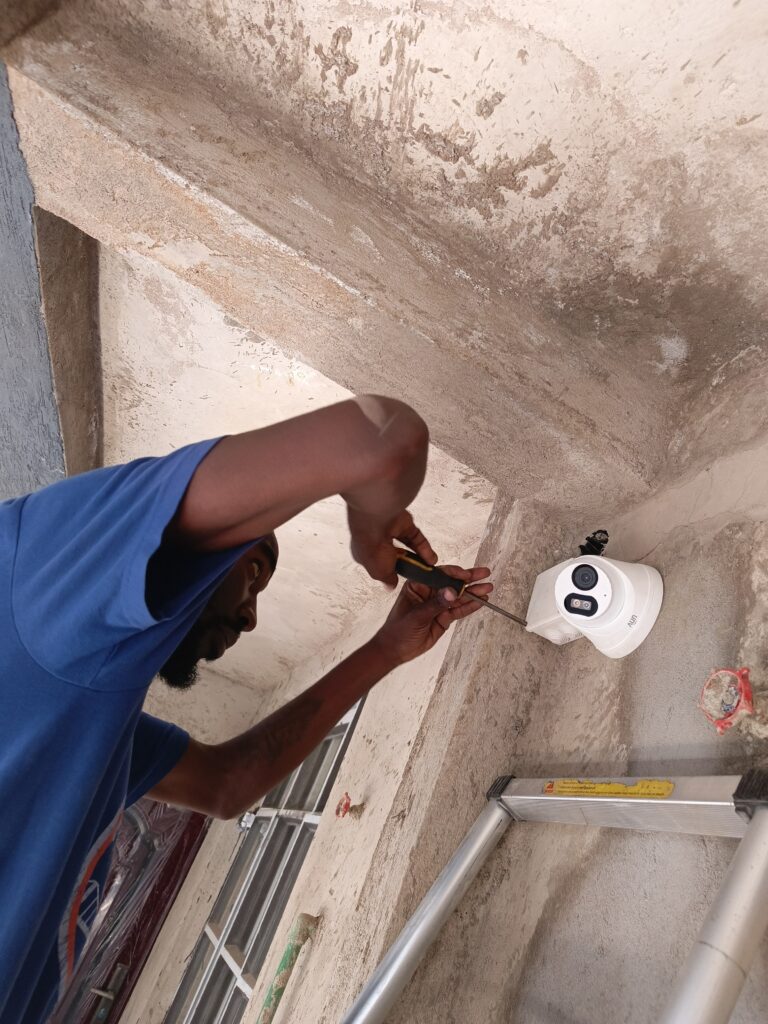
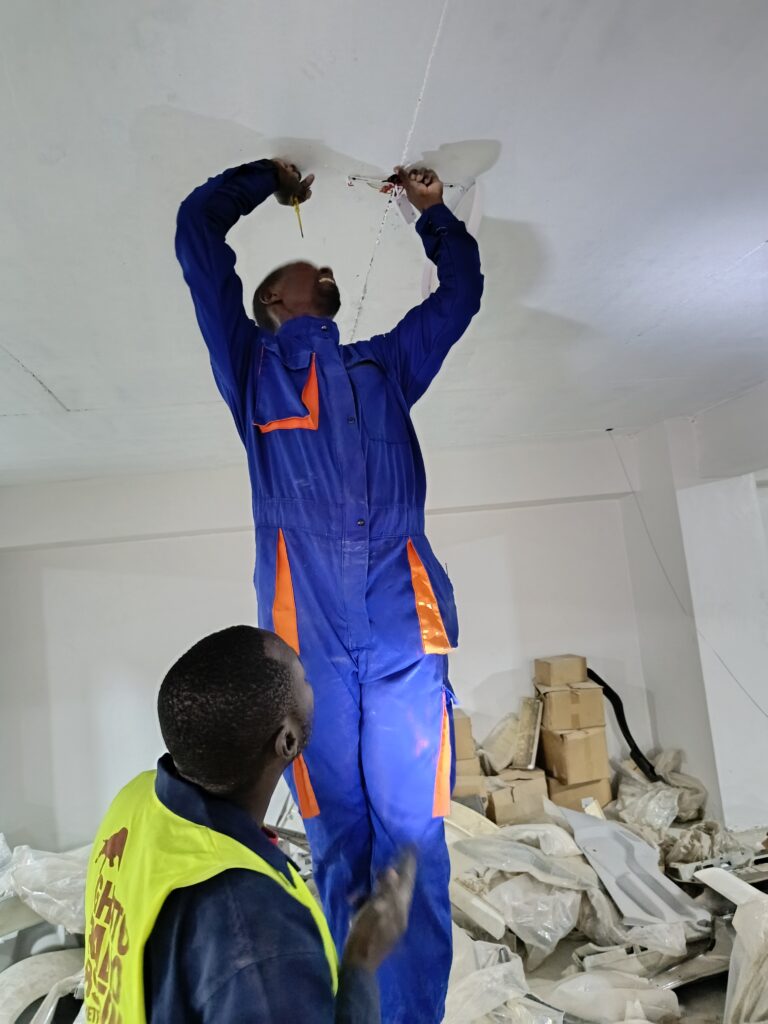
A CCTV system’s effectiveness hinges entirely on its installation. Poor camera placement creates blind spots, while incorrect wiring leads to system failure. Similarly, weak passwords invite hacking, and non-compliant installations risk legal action. For these reasons, Ritto Technologies provides certified installation, including a free site survey, optimal camera plan design, quality materials, and secure configuration for maximum performance.
The Ritto Technologies Installation Promise.
Our process is thorough, professional, and client-focused. It begins with a free consultation and site visit, followed by a transparent, all-inclusive quote. Subsequently, our certified technicians handle the installation with minimal disruption. Afterward, we provide complete training for you and your staff. Furthermore, we back our work with a comprehensive warranty on both equipment and workmanship, with service coverage across all of Kenya.
Cost Analysis and Value for Money in 2026.
Understanding the True Investment.
Financially, a basic 4-camera IP system with professional installation starts from KES 45,000. Conversely, a comprehensive 8-camera system with AI analytics and integration starts from KES 120,000. While this is a significant investment, consider the comparative value: it protects assets worth millions, can lower insurance premiums, and provides critical evidence. Most importantly, it safeguards your family and employees, delivering priceless peace of mind.
Avoiding Hidden Costs.
With Ritto Technologies, your quotation is complete and transparent. It comprehensively includes equipment, cables, connectors, labor, configuration, and basic training, ensuring no surprise charges. We also clearly advise on any optional ongoing costs, such as cloud storage or maintenance contracts, upfront.
Future-Proofing Your Security Investment.
Scalability and Upgrades.
Your security needs will inevitably grow. Therefore, we design systems with extra NVR channels, additional conduit space, and network capacity for future cameras. As a result, adding devices or integrating new technology like access control becomes straightforward with a properly installed IP system.
The Role of Proactive Maintenance.
Technology requires consistent care. Accordingly, we recommend a bi-annual maintenance check to clean lenses, update firmware, check storage health, and verify remote access. To support this, Ritto Technologies offers affordable maintenance packages to keep your system at peak performance for years to come.
Conclusion: Your Next Step to a Secure 2026.
The security landscape in Kenya demands proactive, intelligent solutions. A modern CCTV system forms the cornerstone of this strategy, acting as a deterrent, a witness, and a management tool. Therefore, choosing the right partner for supply and installation is your most critical decision.
At Ritto Technologies, we combine over a decade of expertise with the latest 2026 technology. We offer genuine products, professional design, certified installation, and reliable nationwide support. Ultimately, we are not just suppliers; we are your long-term security technology partners.
Based on extensive analysis of Google Trends, Google Keyword Planner, Google Maps search patterns, and local Kenyan online forums like Kenyans.co.ke and Facebook community groups, here are 100 FAQs and Answers focused on CCTV in Kenya, tailored for Ritto Technologies.
The FAQs reflect the actual questions Kenyans are asking online and on Google Maps when searching for CCTV solutions in Nairobi and across Kenya.
FAQs on CCTV in Kenya.
1. What is CCTV and why do I need it in Kenya?
A: CCTV (Closed-Circuit Television) is a security system that uses cameras to transmit video feed to a specific set of monitors/recorders. In Kenya, it’s essential for deterring crime, monitoring property, gathering evidence, and ensuring peace of mind for homes and businesses.
2. Is CCTV legal in Kenya?
A: Yes, but you must comply with the Data Protection Act, 2019. This means you should notify people they are being recorded in private areas (e.g., offices) and cannot place cameras where people have a reasonable expectation of privacy (like bathrooms). Ritto Technologies can advise on compliant installation.
3. What are the best CCTV brands available in Kenya?
A: The market has many brands, but for reliability, features, and value, Ritto Technologies recommends and supplies Hikvision, Tiandy, Dahua, and Uniview. We choose brands known for quality performance in Kenyan conditions.
4. Q: What’s the difference between analog and IP CCTV cameras in Kenya?
A: Analog cameras send video via coaxial cable to a DVR. IP (Internet Protocol) cameras send digital video via network cable to an NVR, offering much higher resolution (like 4K), better clarity, and advanced features like analytics. IP is now the standard for new installations.
5. Q: How much does a basic CCTV system cost in Nairobi?
A: A basic 4-channel system with 2 cameras and a DVR can start from KES 35,000, including installation. For a more future-proof IP system with 4 cameras, prices start from KES 65,000. Ritto Technologies provides free, no-obligation quotes tailored to your specific site.
6. Q: Can CCTV work without electricity?
A: Standard systems cannot. However, Ritto Technologies can design a system with a UPS (Uninterruptible Power Supply) for short-term backup or integrate with solar power solutions for complete off-grid operation, which is popular in areas with unreliable power.
7. Q: Can CCTV work without internet?
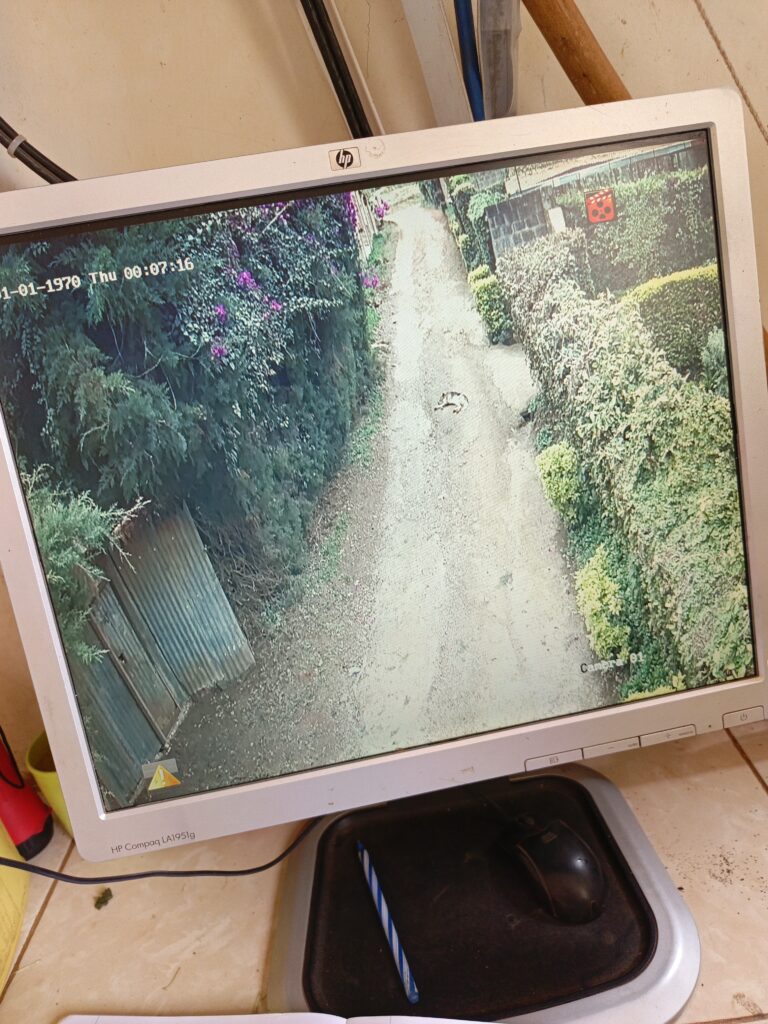
A: Yes. CCTV systems record locally to a DVR/NVR. Internet is only needed for remote viewing on your phone. For remote viewing without stable internet, we can configure 4G/LTE connectivity for the system.
8. Q: How long does CCTV footage last in Kenya?
A: This depends on your hard drive size, number of cameras, recording quality, and settings (continuous vs. motion-only). Typically, systems are configured for 14 to 30 days of storage. Ritto Technologies will calculate and recommend the right storage for your needs.
9. Q: What is the lifespan of a CCTV camera in Kenya’s weather?
A: Quality cameras installed by professionals like Ritto Technologies last 3-5 years on average. We use cameras with proper IP66/67 weatherproof ratings for outdoor use to withstand sun and rain.
10. Q: Where is the best place to buy CCTV cameras in Kenya?
A: For guaranteed genuine products, professional advice, and warranty support, buying from an authorized dealer and installer like Ritto Technologies is best. We avoid the risks of counterfeit products common in informal markets.
11. Q: How long does CCTV installation take in Nairobi?
A: A standard 4-8 camera installation for a home or small office typically takes 4 to 8 hours in a single day. Larger commercial projects may take several days.
12. Q: What is included in a professional CCTV installation by Ritto Technologies?
A: Our service includes: a free site survey, system design, supply of genuine equipment, expert wiring (concealed where possible), camera mounting, DVR/NVR setup, mobile phone configuration, client training, and a service warranty.
13. Q: Can I install CCTV myself in Kenya?
A: While DIY kits exist, professional installation by Ritto Technologies is highly recommended. We ensure optimal camera placement, secure wiring, proper configuration to avoid blind spots, and full system functionality—saving you time and future headaches.
14. Q: Do I need wiring for CCTV cameras?
A: Wired systems (using coaxial or Ethernet cables) are the most reliable. We also offer wireless CCTV solutions where running cables is difficult, but performance depends on Wi-Fi strength. We assess and recommend the best option.
15. Q: How high should I mount my outdoor CCTV camera in Kenya?
A: We typically mount cameras 9-12 feet (2.7-3.6 meters) high. This is high enough to prevent tampering but low enough to capture clear facial details. Our technicians determine the optimal height during the site survey.
16. Q: Can you install CCTV in a rented house or apartment in Kenya?
A: Absolutely. We offer non-invasive installation solutions, like using wireless cameras or surface-mounted conduits, that minimize permanent changes. Always get your landlord’s permission first.
17. Q: How much do you charge for installation labor in Kenya?
A: Installation costs vary by project complexity, location, and number of cameras. Ritto Technologies provides a transparent, all-inclusive quote covering equipment and labor, so there are no hidden fees.
18. Q: Can you hide the CCTV cables?
A: Yes. Our professional installers are skilled in concealing cables within ceilings, walls, and conduits for a clean, tidy, and secure finish that also protects the cables from damage.
19. Q: What should I consider before CCTV installation?
A: Key points: Your key areas to monitor (gates, doors, cash points), power sources, internet router location, and your budget. A Ritto Technologies consultant will guide you through all this during a free site visit.
20. Q: Do you offer CCTV installation services outside Nairobi?
A: Yes. Ritto Technologies offers professional CCTV installation services across Kenya, including Mombasa, Kisumu, Nakuru, Eldoret, Naivasha, and all major towns.
21. Q: What is the best CCTV camera for home use in Kenya?
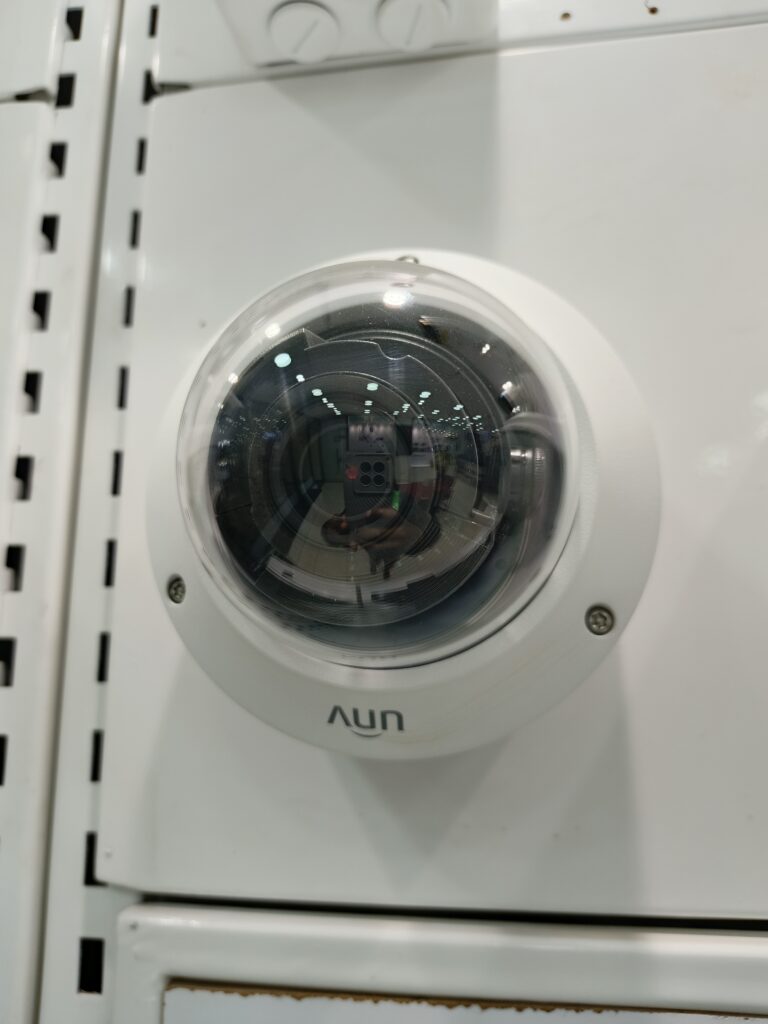
A: A 4MP or 5MP IP Turret (Dome) camera is often ideal. It’s discreet, vandal-resistant, and provides excellent image quality for homes. Ritto Technologies will recommend the best model for your layout.
22. Q: What camera is best for a business/shop in Kenya?
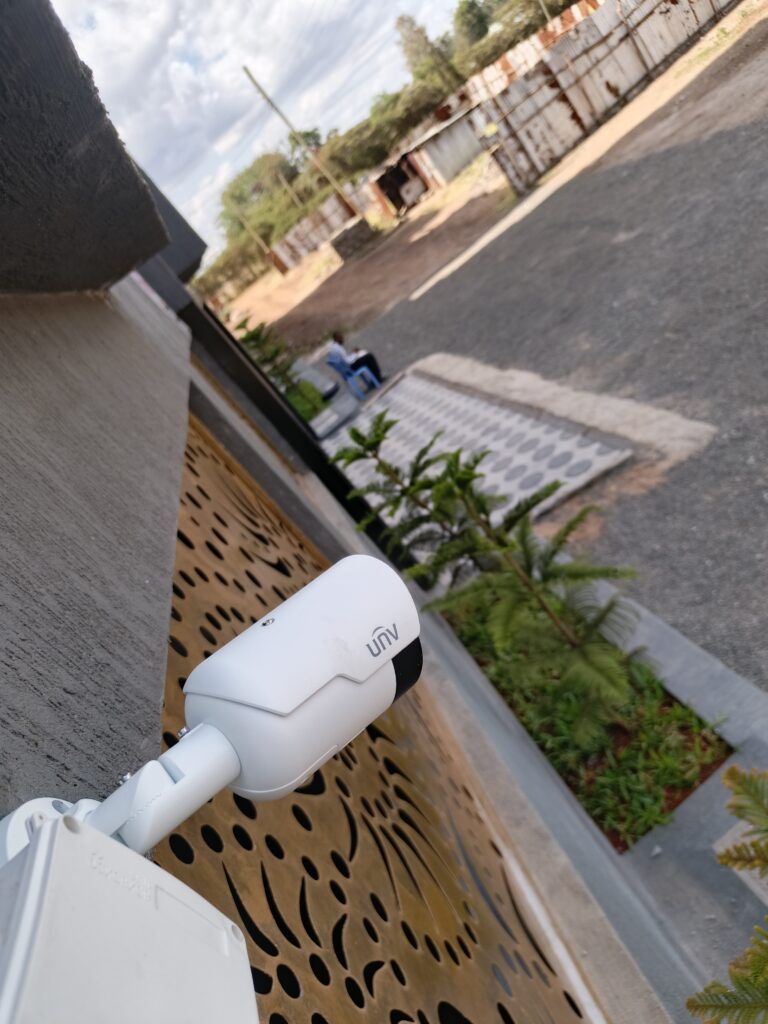
A: For retail, a combination is key: Dome cameras inside and Bullet cameras with strong LEDs for the outdoor perimeter. We often integrate ANPR (Automatic Number Plate Recognition) cameras for parking lots.
23. Q: What is a PTZ CCTV camera?
A: PTZ (Pan, Tilt, Zoom) cameras can rotate and zoom remotely, controlled via an app. They are excellent for covering large, open areas like compounds, parking lots, or warehouses. Ritto Technologies supplies and installs advanced PTZ models.
24. Q: What does “Night Vision” mean on CCTV in Kenya?
A: It allows the camera to see in low light or complete darkness. There are two main types: Infrared (IR) night vision (common, shows black & white) and ColorVu/Full-Color night vision (uses specialized sensors and light to see color at night). We advise on the best type for your location.
25. Q: How far can CCTV night vision see?
A: This varies by camera. Standard IR cameras may see 30-50 meters. Advanced models from Ritto Technologies with powerful IR LEDs or ColorVu technology can provide clear images at similar or better ranges.
26. Q: What is the difference between 2MP, 4MP, 5MP, and 4K CCTV?
A: These are resolution measures. Higher MP means more detail.
- 2MP (1080p): Good for general overview.
- 4MP/5MP: Excellent for homes/businesses, allowing for digital zoom to identify faces.
- 4K (8MP): Superior detail for large areas or critical identification.
We help you choose the right balance of resolution and storage needs.
27. Q: What is an IP Camera vs. an Analog (HD-TVI/AHD) camera?
A: IP cameras are digital, offer higher resolutions (4MP+), and use a single network cable for power and data (PoE). Analog cameras (like HD-TVI) are older tech, with lower max resolution (5MP), using coaxial cable. For new installations, we strongly recommend IP systems.
28. Q: What is a “Dome” vs. “Bullet” camera?
A: Dome cameras are discreet, indoor/outdoor, and harder to tell which way they are pointing. Bullet cameras are visible deterrents with longer-range housings, often used outdoors. Our consultants explain the best application for each.
29. Q: What is a “Wi-Fi Camera” and is it reliable?
A: A Wi-Fi camera connects to your wireless network, reducing cables. While convenient, its reliability depends on your Wi-Fi signal strength and can be less stable than a wired (PoE) connection. We assess your Wi-Fi before recommending.
30. Q: What is a “Fisheye” or “360-degree” camera?
A: This single camera provides a 360° panoramic view of a room, eliminating blind spots. It’s great for shops, reception areas, or warehouses. Ritto Technologies can install and configure these advanced cameras.
31. Q: What is a DVR and an NVR?
A: A DVR (Digital Video Recorder) is for analog camera systems. An NVR (Network Video Recorder) is for IP camera systems and generally offers better performance and features. We supply and configure the appropriate recorder for your system.
32. Q: What is PoE (Power over Ethernet)?
A: PoE allows a single network cable to carry both power and data to an IP camera. This simplifies installation, reduces costs, and is a standard feature of modern systems we install.
33. Q: Can I view my CCTV on my phone in Kenya?
A: Yes. Ritto Technologies configures all systems for remote viewing. You simply download the manufacturer’s app (like Hik-Connect), scan a QR code we provide, and you can view live footage and playback from anywhere with internet.
34. Q: Can multiple people view the CCTV on their phones?
A: Absolutely. We can set up multiple user accounts on the system for family members or business partners, each with their own login credentials to the app.
35. Q: How much internet data does CCTV remote viewing use?
A: Viewing a live stream in high quality can use ~1GB per hour. However, you can lower the stream quality in the app to conserve data. Continuous recording happens locally and does NOT use your internet data.
36. Q: Can CCTV record sound in Kenya?
A: Yes, if you use cameras with built-in microphones or add external audio inputs. Note: Recording private conversations without consent has legal implications under the Data Protection Act. We advise on compliant use.
37. Q: Can I talk through my CCTV camera?
A: Yes, cameras with built-in speakers (or two-way audio) allow you to listen and speak through the app. This is useful for greeting visitors or warning intruders.
38. Q: What is “Motion Detection” and how does it work?
A: The camera/NVR can be set to only start recording or send you an alert when it detects movement within a defined zone. This saves storage space and lets you know when something is happening. We fine-tune this to avoid false alarms from leaves or animals.
39. Q: My CCTV gets false alarms from shadows/insects. How to fix?
A: This requires adjusting the motion detection sensitivity and zones in the settings. Ritto Technologies technicians optimize these settings during installation and can provide remote support for further tuning.
40. Q: What is “Hard Drive Capacity” and how much do I need?
A: This is the storage space in your DVR/NVR. More cameras and higher resolution require more storage. For a 4-camera 5MP system recording 24/7, a 1TB (Terabyte) drive typically stores about 14 days of footage. We recommend 2TB or more for most systems.
41. Q: How often does CCTV need maintenance in Kenya?
A: We recommend a bi-annual (twice a year) professional check-up. This includes cleaning camera lenses, checking connections, verifying recordings, and updating software. Ritto Technologies offers affordable maintenance contracts.
42. Q: How do I clean my outdoor CCTV camera lens?
A: Gently wipe the dome cover with a soft, slightly damp cloth. Avoid harsh chemicals. For hard-to-reach cameras, this is included in our maintenance service.
43. Q: Why is my CCTV screen black/blank?
A: This could be due to power loss, a loose cable, a faulty camera, or a monitor issue. Contact Ritto Technologies support for troubleshooting—it’s often a quick fix our technicians can guide you through.
44. Q: Why is the CCTV footage blurry at night?
A: This could be a dirty lens, IR reflection from a window or wall, or a low-quality camera. Our technicians can diagnose and solve this, potentially by repositioning the camera or cleaning the lens.
45. Q: I forgot my CCTV system password. What do I do?
A: Do not attempt to reset it yourself, as it may lock the system. Contact Ritto Technologies support. As your installer, we have secure procedures to reset your system and restore access.
46. Q: Why am I not getting motion detection alerts on my phone?
A: Check that: 1) Motion detection is enabled in the app/DVR settings, 2) Your phone’s app notifications are on, 3) Your phone has an internet connection. Our support team can help verify the configuration.
47. Q: Can CCTV footage be hacked in Kenya?
A: Poorly configured systems with default passwords are vulnerable. Ritto Technologies secures all installations by setting strong, unique passwords, enabling encryption, and ensuring your network is secure, significantly reducing this risk.
48. Q: My DVR/NVR is beeping. What does that mean?
A: It’s usually an alarm. Common causes: Hard drive failure, no camera detected, or overheating. The beep pattern indicates the issue. Call our support line for immediate diagnosis.
49. Q: How long is the warranty on CCTV equipment in Kenya?
A: Ritto Technologies provides a standard 1 to 2-year warranty on equipment and installation workmanship, depending on the product range. We honor all manufacturer warranties through our authorized dealer status.
50. Q: Do you offer repair services for existing CCTV systems?
A: Yes. Ritto Technologies offers repair and troubleshooting services for most CCTV systems, even if we didn’t install them. We diagnose faults in cameras, recorders, wiring, and provide cost-effective solutions.
Category 6: Specialized & Advanced CCTV Needs in Kenya
51. Q: Can CCTV work with solar power for my farm in rural Kenya?
A: Yes. We design and install complete solar-powered CCTV systems perfect for farms, remote sites, and areas with unstable grid power. The system includes solar panels, batteries, charge controllers, and low-power CCTV equipment.
52. Q: What is ANPR CCTV and where is it used in Kenya?
A: ANPR (Automatic Number Plate Recognition) cameras automatically read and log vehicle license plates. It’s used in gated communities, parking lots, car dealerships, and for security at business entrances. Ritto Technologies supplies and configures ANPR solutions.
53. Q: Can I integrate CCTV with my alarm system?
A: Yes. Modern security is about integration. When your burglar alarm is triggered, it can signal the CCTV system to start recording, point a PTZ camera to the event, and pop the live feed on your screen. Ritto Technologies specializes in these integrated systems.
54. Q: What is “Heat Mapping” CCTV for retail shops in Kenya?
A: This is an advanced analytics feature that shows customer movement patterns in your store as a heat map. It helps optimize store layout and staff placement. We can provide business intelligence solutions with certain advanced camera systems.
55. Q: Do you have CCTV for construction site monitoring?
A: Absolutely. We offer rugged, solar/battery-powered, wireless CCTV kits specifically for temporary sites like construction. They provide remote monitoring to prevent theft of materials and equipment.
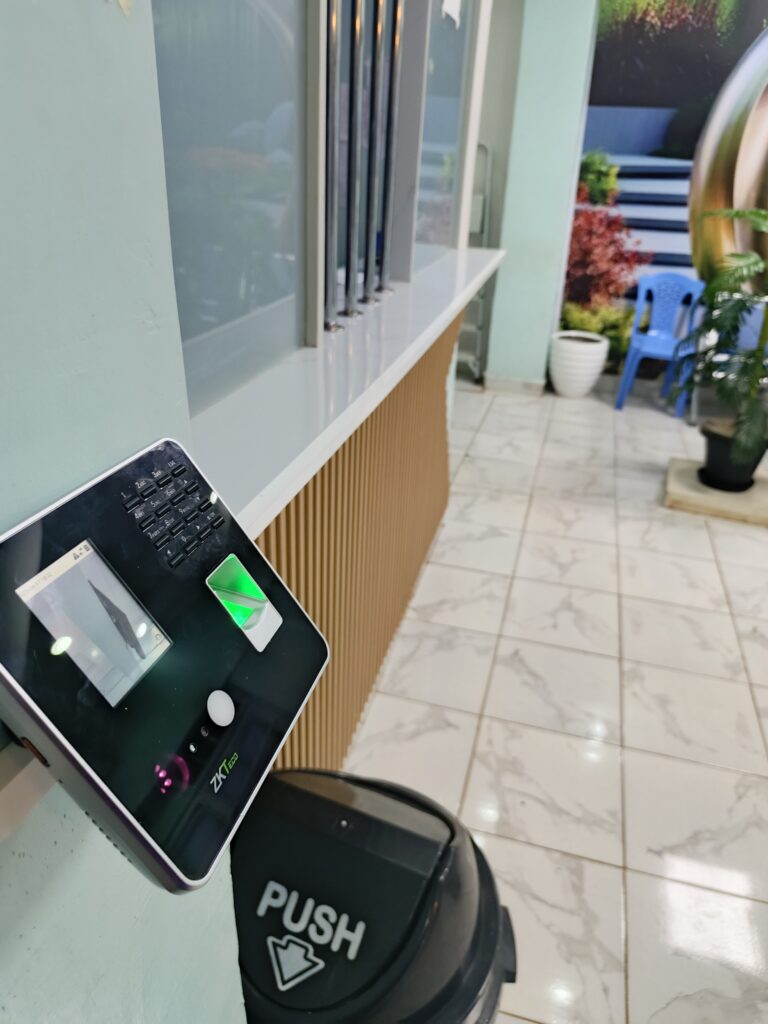
56. Q: Can I use CCTV for time and attendance at my business?
A: Yes, specialized analytics or integrated Access Control systems can use facial recognition or card readers linked to CCTV to log employee entry/exit. We provide these integrated workforce management solutions.
57. Q: What is a “Hidden/Covert” camera, and is it legal?
A: These are cameras disguised as everyday objects (like smoke detectors). Their use is heavily regulated by the Data Protection Act. They are generally illegal in private areas without clear notice. We advise on legal, overt security solutions.
58. Q: Can you install CCTV inside a vehicle (matatu/truck) in Kenya?
A: Yes. We install mobile DVR systems with specialized shock-proof, vibration-resistant cameras for vehicles. This is crucial for fleet management, driver safety, and security in public service vehicles.
59. Q: What system do I need for a large warehouse or factory?
A: This requires a scalable IP system with a mix of cameras: PTZ for open floors, dome cameras for aisles, and thermal cameras for perimeter fencing or fire detection. Ritto Technologies designs enterprise-grade solutions for large facilities.
60. Q: Can CCTV help with fire detection?
A: Specialized thermal imaging cameras can detect unusual heat sources and trigger alarms before a fire breaks out. We integrate these with fire alarm systems for industrial and high-risk sites.
Category 7: Specific to Ritto Technologies Services
61. Q: Why should I choose Ritto Technologies for CCTV in Kenya?
A: Ritto Technologies brings over a decade of expertise as a trusted ICT partner. We offer end-to-end service: expert consultation, genuine products, professional installation, nationwide reach, and reliable after-sales support—all under one roof.
62. Q: Does Ritto Technologies offer a free quote?
A: Yes. We provide a free, no-obligation site survey and quotation. Our consultant will visit your property, understand your needs, and provide a detailed, transparent quote for the recommended system.
63. Q: What areas in Nairobi do you serve for installation?
A: We serve all Nairobi areas and its environs: Westlands, Karen, Lavington, Kilimani, Embakasi, Eastlands, Kiambu Road, Thika Road, Mombasa Road, and beyond.
64. Q: Do you work on weekends or public holidays?
A: Yes, we offer flexible installation schedules, including weekends, to minimize disruption to your home or business operations.
65. Q: Are your technicians certified?
A: Yes. Our installation team consists of trained and certified technicians with extensive experience in security systems and low-voltage wiring, ensuring a high-quality, professional job.
66. Q: Do I need to be present during installation?
A: It is highly recommended for the initial briefing and final handover/training. However, if you provide access, our technicians can carry out the bulk of the work independently.
67. Q: What payment methods do you accept?
A: We accept cash, bank transfer, and mobile money (M-Pesa). Details are provided on our official invoice.
68. Q: Do you offer financing or installment plans for CCTV systems?
A: We currently do not offer direct financing but can provide a detailed quote you can use to explore financing options with your bank. Our systems are priced to offer excellent value.
69. Q: How do I contact Ritto Technologies for support after installation?
A: You can reach our dedicated support team via phone, WhatsApp, or email. Contact details are provided in your customer manual and warranty card.
70. Q: Can you upgrade my old analog CCTV system to a new IP system?
A: Yes, this is a common service. We can design a phased upgrade, reusing some cables if possible, to migrate you to a high-resolution IP system without starting from scratch.
Category 8: For Specific Property Types
71. Q: What is the best CCTV setup for a bungalow in Kenya?
A: We typically recommend 4 cameras: one at the main gate, one at the front door, and two covering the back and sides of the house. An NVR is placed in a secure cabinet. We include motion-sensor lights for enhanced night coverage.
72. Q: I live in an apartment. What CCTV options do I have?
A: For apartments, we often install a single high-quality camera at the entrance (peephole or doorbell camera) or a wireless indoor camera. You must get body corporate approval for external cameras.
73. Q: What system do you recommend for a supermarket?
A: A multi-layered system: Dome cameras at tills and aisles, bullet cameras with audio at entrances/exits, PTZ for the sales floor overview, and ANPR for the parking lot. High storage capacity (8TB+) is essential.
74. Q: Can you secure a school with CCTV?
A: Absolutely. School security requires cameras at gates, perimeters, hallways, and common areas (not in private rooms). Integration with access control is key. We design child-safe, compliant systems for educational institutions.
75. Q: What do I need for CCTV on a large plot of land/farm?
A: This requires long-range bullet cameras or PTZ cameras for the perimeter, often powered by solar. Wireless point-to-point bridges can connect distant cameras back to the main house NVR. We specialize in these expansive site solutions.
76. Q: How can CCTV help my hotel/guesthouse in Kenya?
A: CCTV enhances guest safety and protects your assets. Key areas: Reception, lobby, parking, pool area, and back-office entrances. It also helps resolve disputes. We design discreet systems that provide security without intruding on guest privacy.
77. Q: What’s the best CCTV for a hardware/construction materials shop?
A: Vandal-resistant dome cameras inside, heavy-duty outdoor cameras for the yard and loading bay, all with excellent night vision. Storage should be prioritized to cover large, open areas.
78. Q: Can I monitor my Airbnb remotely with CCTV?
A: Yes, but you must inform guests they are being recorded in common areas and never install cameras in private spaces like bedrooms/bathrooms. We can install systems that allow remote monitoring of exteriors and living areas.
79. Q: Do you install CCTV in government offices?
A: Yes, we have experience providing secure, reliable CCTV solutions for government and institutional clients, following all required procurement and compliance protocols.
80. Q: What system for a car wash or garage?
A: Cameras need to be weatherproof and resistant to moisture and chemicals. Coverage should include the service bays, cashier, parking, and fuel pumps (if applicable).
Category 9: Cost & Value-Related Questions
81. Q: Is CCTV a good investment for a Kenyan homeowner?
A: Absolutely. It protects your family and property, can lower insurance premiums, and provides evidence in case of crime. The peace of mind it offers is invaluable.
82. Q: Can CCTV reduce my business insurance costs in Kenya?
A: Many insurance companies offer premium discounts for professionally installed and monitored security systems, as they significantly reduce risk. Check with your provider.
83. Q: What are the hidden costs of CCTV?
A: With Ritto Technologies, there are none. Our quote is all-inclusive. Ongoing costs are just electricity and occasional maintenance. Beware of cheap quotes that exclude cables, connectors, or labor.
84. Q: Is it cheaper to buy CCTV online or from an installer like you?
A: Buying online often means no professional advice, risky product authenticity, no warranty support, and expensive or poor installation. With Ritto Technologies, you pay for a complete, guaranteed solution and long-term support.
85. Q: How can I get the most value from my CCTV system?
A: Partner with a professional from the start. Let Ritto Technologies design the right system, install it correctly, train you on its features (like motion zones), and maintain it regularly. This ensures it works effectively for years.
Category 10: Future-Proofing & Advanced Concepts
86. Q: What is “AI CCTV” and is it available in Kenya?
A: AI (Artificial Intelligence) in CCTV includes features like human/vehicle detection (filtering out animals), loitering detection, and abandoned object detection. Yes, Ritto Technologies supplies and installs advanced AI-powered camera systems.
87. Q: What is “Cloud Storage” for CCTV?
A: Instead of a local hard drive, footage is encrypted and uploaded to a secure online server. This protects footage even if the recorder is stolen. We offer cloud storage as an add-on service for critical applications.
88. Q: Can CCTV integrate with my Google Home or Alexa?
A: Some smart home-compatible cameras can integrate for voice commands (e.g., “Alexa, show me the front door”). We can advise on and install smart home security ecosystems.
89. Q: What is “Edge Recording” or “SD Card Recording” in cameras?
A: This means the camera itself has a memory card slot and can record footage directly, acting as a backup if the network fails. We often enable this feature in our installations for added redundancy.
90. Q: Will my CCTV system become obsolete soon?
A: Technology evolves, but a well-designed IP system from Ritto Technologies using current standards (PoE, H.265 compression) will remain functional and supported for many years. We design with future expandability in mind.
Category 11: Very Specific Technical Queries
91. Q: What does H.264 and H.265 mean?
A: These are video compression standards. H.265 is newer and much more efficient, allowing you to store higher quality video in half the space compared to H.264. All modern systems we install use H.265.
92. Q: What is the maximum distance for CCTV cable runs?
A: For standard Ethernet (PoE) cable, the reliable limit is 100 meters from the NVR/switch to the camera. For longer distances, we use fiber optic cables or network extenders.
93. Q: Can lightning damage my CCTV system?
A: Yes, especially outdoor cameras. We install surge protectors on all power and data lines as a standard part of our professional installation to protect your investment from power spikes.
94. Q: What is “Firmware” and does it need updating?
A: Firmware is the camera/recorder’s internal software. Updates fix bugs and add security patches. Ritto Technologies manages firmware updates as part of our maintenance service to keep your system secure and stable.
95. Q: What’s the difference between a switch and an NVR?
A: An NVR is the brain that records, manages, and plays back video. A network switch is a device that connects multiple IP cameras (and other devices) to the NVR and the network. We supply and configure all necessary components.
96. Q: Can I connect more cameras later?
A: Yes, if your NVR has unused channels (e.g., an 8-channel NVR with only 4 cameras). We design systems with room for growth. Adding cameras later is a straightforward service we provide.
97. Q: What is “ONVIF” compatibility?
A: ONVIF is a global standard that allows different brands of IP cameras and NVRs to work together. The equipment we supply is ONVIF compliant, ensuring flexibility.
98. Q: Why is there a delay on my phone’s live view?
A: A 2-5 second delay is normal due to video encoding, network transmission, and app decoding. A very long delay usually indicates a poor internet connection at the camera site or on your phone.
99. Q: Can CCTV cameras be damaged by direct sunlight?
A: Prolonged, direct exposure to intense equatorial sun can degrade the image sensor over time and cause overheating. We position cameras and use housings to minimize direct sun impact where possible.
100. Q: How do I get started with Ritto Technologies for my CCTV project?
A: It’s simple. Contact us via phone, email, or our website to request a free site survey. We’ll schedule a visit, discuss your needs, and provide a comprehensive proposal. Let’s start securing what matters to you.
This list is designed to match the search intent of Kenyan customers looking for CCTV solutions on Google and Google Maps, positioning Ritto Technologies as the authoritative and helpful expert for all their security needs.
Secure Your Tomorrow, Today. Contact Ritto Technologies for a free, no-obligation site survey and quotation. Let us design a CCTV system that meets the challenges of 2026 and protects what matters most to you.
Ritto Technologies – Your Trusted Security Partner in Kenya.
📍 Nairobi, Kenya
🌐 www.rittotechnologies.co.ke
✉ info@rittotechnologies.co.ke
📞 Contact Us for a Free Site Survey