
Hospital Nurse Call Systems in Kenya: A Complete Guide to How They Work
In the dynamic and demanding landscape of modern healthcare, where every second can impact patient outcomes, seamless and immediate communication transcends mere convenience—it forms the very bedrock of patient safety, clinical efficiency, and overall care quality. For healthcare facilities across Nairobi, Mombasa, Kisumu, and throughout Kenya, implementing a robust and reliable Hospital Nurse Call System is not an optional luxury but a fundamental infrastructural investment towards achieving operational excellence and accreditation standards. These sophisticated systems serve as the central nervous system of a clinical ward, bridging the critical gap between a patient in need and the caregiver who can provide assistance, ensuring that every request for help is communicated instantly, clearly, and routed efficiently to the appropriate personnel.
The evolution of medical technology demands communication tools that keep pace. At Ritto Technologies, we stand at the forefront of this communication revolution within the Kenyan healthcare sector. We specialize in the end-to-end supply, seamless installation, and comprehensive maintenance of both time-tested, reliable traditional systems and cutting-edge, interoperable Smart Ward IoT Nurse Call solutions. This exhaustive guide will delve into the intricate mechanics of how these systems function, break down their core components, explore their advanced capabilities, and underscore their indispensable role in shaping the future of modern, patient-centered Kenyan healthcare.
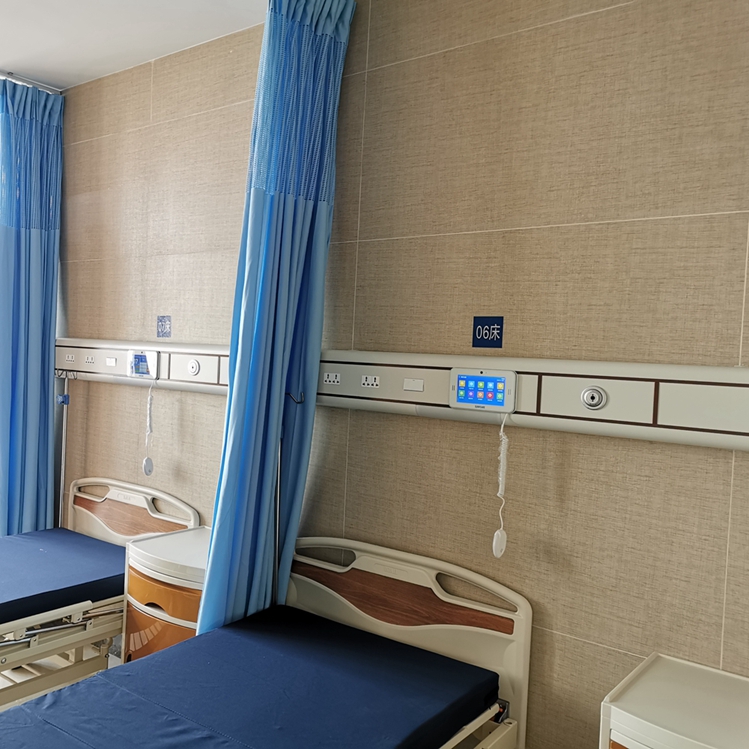
1. What Is a Hospital Nurse Call System in Kenya? Defining the Critical Link
A Hospital Nurse Call System in Kenya is a dedicated, purpose-built communication network installed within a healthcare facility. Its primary design function is to empower patients, often in vulnerable states, to effortlessly summon help from nursing or auxiliary staff. It transforms a simple, low-effort action—such as pressing a button, pulling a cord, or touching a screen—into a coordinated, multi-layered alert that reaches the right personnel through a combination of visual, audible, and often textual or software-based notifications.
In its essence, it acts as the digital lifeline and nervous system of a hospital ward or entire facility. It creates a reliable network connecting every patient bed, bathroom, and common area to a central monitoring point and, crucially, to staff on the move. In the context of Nairobi hospitals and clinics across Kenya, deployment typically revolves around two main technological tiers, designed to meet varying clinical needs, infrastructure realities, and budgetary considerations.
Traditional Wired Nurse Call Systems, such as the globally recognized and exceptionally durable ETR 2-wire or 4-wire series, have formed the backbone of hospital communications for decades. Renowned for their straightforward operation and resilience, they form a hardwired network where signals travel through dedicated, shielded cables. This architecture offers exceptional reliability with minimal interference, making them a trusted solution in demanding, high-availability environments like Intensive Care Units (ICUs) and high-dependency wards where system failure is not an option.
Smart IoT-Based Nurse Call Systems represent the transformative next generation of patient-staff communication. Built on flexible platforms like Android and utilizing robust Internet of Things (IoT) protocols (such as LoRaWAN, Zigbee, or dedicated wireless mesh networks), these systems integrate seamlessly with other hospital technologies. They move far beyond basic calling functions to enable rich data collection, process automation, two-way multimedia communication, and sophisticated environmental monitoring. They form the intelligent backbone of a truly digital, data-driven smart ward, enabling predictive care and enhanced operational visibility.
 Get A Quote On Whatsapp
Emergency Nurse Call System
Hospital Nurse System Get A Quote On Whatsapp
Hospital Emergency Nurse Call Button & Pager System
Hospital Nurse System- Get A Quote On Whatsapp
Hospital Nurse Call & Intercom Management System in Kenya
Hospital Nurse System - Get A Quote On Whatsapp
Hospital Nurse Call & Patient Call Systems
Hospital Nurse System

2. How the Traditional ETR Nurse Call System Works: The Proven Backbone
The ETR series of nurse call systems has been a trusted, foundational solution in Kenyan hospitals, private clinics, and nursing homes for years. Its enduring popularity stems from a simple, robust, and failsafe architecture that is intuitively easy for staff of all technical levels to understand and use reliably, especially during high-pressure emergency situations where clarity is paramount.
Detailed Breakdown of Key Components in a Kenyan Hospital Setting:
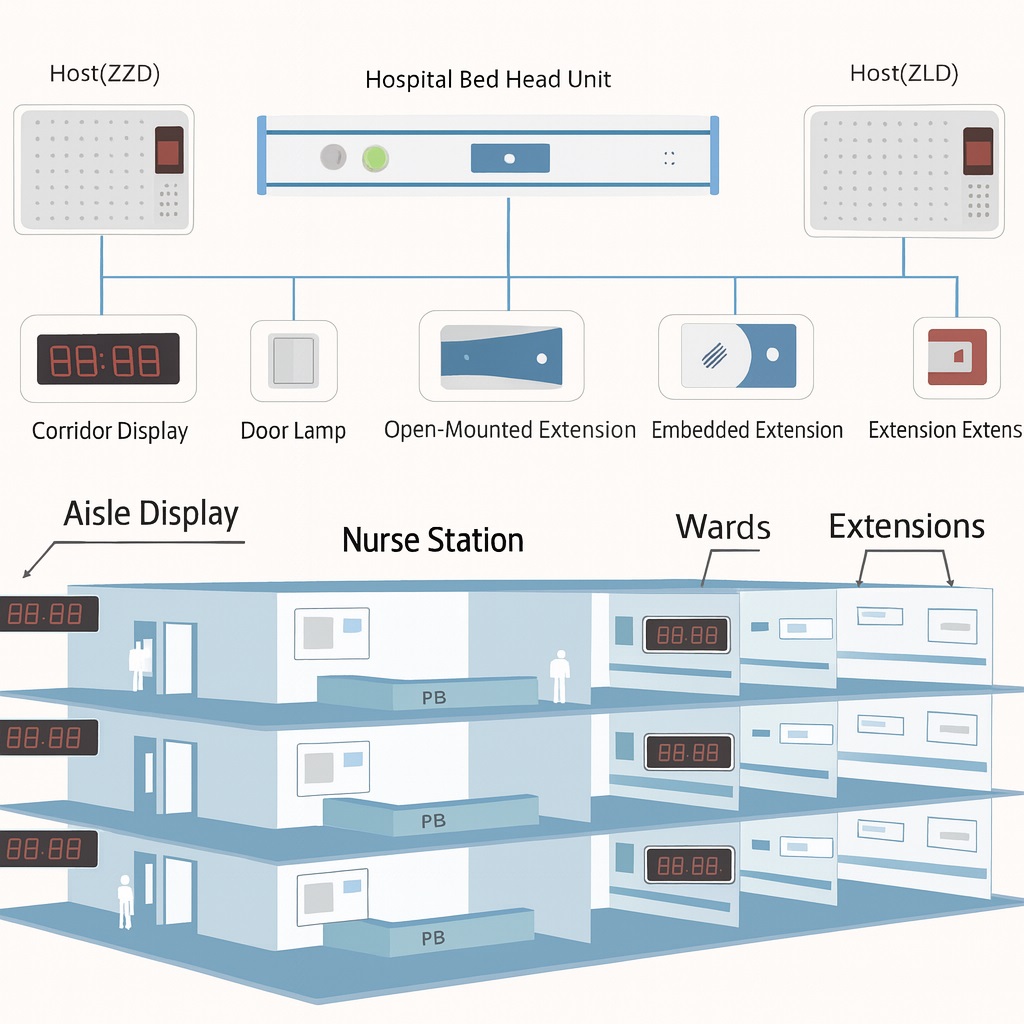
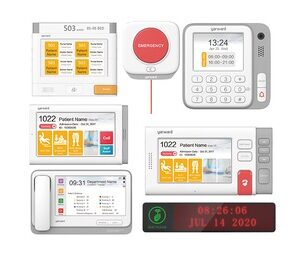
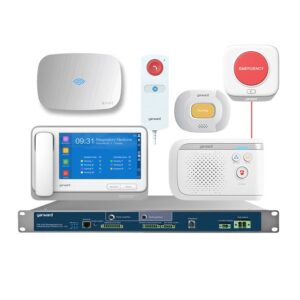
- Host Unit (Master Station): This is the system’s unwavering command center, invariably installed at the primary nurses’ station or central monitoring point. It features a clear, often backlit display panel that shows the precise room and bed number of an active call. It incorporates a built-in speaker and microphone for immediate two-way voice communication with the patient and features dedicated, clearly labeled buttons to acknowledge, cancel, or reset calls. Its design philosophy prioritizes immediacy and simplicity, allowing for instinctive staff response without complex menus.
- Bed Extension Units: Located securely at each patient’s bedside, this is the patient’s primary interface with the care team. It typically houses a prominent, easy-to-press call button and may include a handset for direct, private conversation with the nurse station. Some advanced models feature a built-in night light for patient comfort or a local cancel button for the patient to use if a need resolves spontaneously.
- Door Lamps (Room Indicators): Mounted conspicuously above or beside the patient room door, these visual signals are absolutely crucial for staff moving through the corridors. A steady green light universally indicates an active, standard-priority call from the bed. A rapidly flashing red light signals a higher-priority emergency call from the bathroom or a dedicated emergency pendant, allowing for instant visual prioritization and intervention by the closest available staff member, a critical feature for fall prevention protocols.
- Corridor Display Panels: These large, high-visibility, often LED-based screens are strategically mounted in main hallways, at secondary nursing substations, or at key juncture points. They provide a continuous, scrolling list of all active calls, including the room number, bed number, and often the call duration, giving clinical team leaders and administrators a clear, real-time overview of ward status and staff workload at a glance.
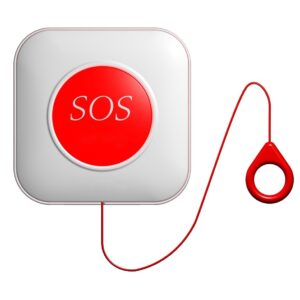
- Bathroom Emergency Extensions: Designed specifically for wet and humid environments, these are rugged, waterproof units typically featuring a large, easy-to-grip pull-cord or a prominent, splash-proof emergency button. Activation generates a distinct, high-priority alarm tone at the master station and triggers the flashing red door lamp, ensuring a swift, prioritized response to potential falls, slips, or sudden medical emergencies in the high-risk bathroom environment.
3. Step-by-Step: How a Call Works in a Traditional System in a Kenyan Ward
Understanding the precise, step-by-step patient-to-nurse communication flow highlights the system’s engineered efficiency and its role in creating a safety net.
Step 1: Patient Initiates a Call.
A patient feeling unwell, requiring pain medication, needing assistance to the bathroom, or experiencing distress presses the large, accessible button on their bedside unit or firmly pulls the cord in the bathroom. This physical action closes an electrical circuit within the system’s dedicated wiring loom.
Step 2: Immediate Alert at the Nurse Station.
The signal travels instantly and without delay through the dedicated, shielded cabling directly to the Host Unit. The unit emits a clear, audible beep or tone, and the alphanumeric display screen illuminates brightly with the specific bed (e.g., 12B) or room number (e.g., Room 305). Critically, if it’s a bathroom emergency call, the alarm tone is distinct, more urgent, and often louder to cut through ambient noise.
Step 3: Door Lamp Activates for Instant Corridor Visibility.
Simultaneously and automatically, the door lamp mounted outside the patient’s room activates. A solid green light instantly informs any passing doctor, nurse, or orderly exactly which room has an active call. A rapidly flashing red light immediately and wordlessly communicates a “code red” bathroom emergency, enabling the closest qualified staff member to intervene without a single second of delay or the need for verbal delegation.
Step 4: Corridor Display Updates for Situational Awareness.
The central corridor display panel updates its dynamic list to include the new call, often with a timestamp. This allows charge nurses, matrons, and clinical managers to monitor overall ward workload, identify emerging patterns, and proactively ensure no call is missed, overlooked, or left unattended for an extended period, thereby enforcing accountability.
Step 5: Two-Way Talkback is Established for Preliminary Triage.
Before physically entering the room—which is a significant efficiency gain—a nurse can press the corresponding call button on the Host Unit and speak directly to the patient through the bedside speaker. This allows for an initial verbal assessment (“Mr. Omondi, what do you need?”), provides immediate reassurance (“I can hear you, a nurse is on the way right now.”), and can help triage the urgency, which is particularly valuable in managing non-critical requests efficiently.
Step 6: Nurse Resets the System, Closing the Loop.
Once the patient’s needs have been fully and satisfactorily attended to, the nurse presses the reset or cancel button either at the bedside unit or centrally on the Host Unit. This action clears the call from all displays, extinguishes the door lamp, and typically logs the completion time of the event. This resets the system for the next request and creates a basic audit trail of response times.
4. Smart IoT Nurse Call Systems in Kenya (The Android & Two-Bus Revolution)
Moving beyond basic one-way signaling, Smart IoT Nurse Call Systems represent a paradigm shift, transforming the entire ward into an interactive, data-rich, and intelligent care environment. These systems leverage modern, scalable platforms like Android to create a deeply integrated ecosystem of devices that communicate not just alerts, but rich contextual information.
What Makes It “Smart”? The Core Intelligence.
The intelligence lies in bi-directional connectivity, data integration, and interoperability. Unlike traditional systems that only pass a simple on/off electrical signal, smart systems create a local area network where devices communicate packets of data. They utilize a blend of WiFi, Bluetooth Low Energy (BLE), dedicated RF bands, and sometimes Power-over-Ethernet (PoE) backbones to connect not just call points, but also vital signs monitors, nurse staff badges, staff location tags, environmental sensors, and core hospital software systems like the EMR/HIS.
Smart Components in Detail for a Kenyan Smart Ward:
- Touchscreen Android Nurse Stations: These are not simple displays; they are powerful Android tablets or wall-mounted panels providing an intuitive, graphical user interface (GUI). Nurses can see patient names, photos, allergy alerts, fall risk scores, and specific call priorities (e.g., “Water,” “Pain,” “Toilet,” “Emergency”), moving far beyond a simple room number.
- Advanced Bedside Touch Panels: Patients have access to a sophisticated multimedia terminal. Beyond calling, it can offer entertainment (TV, radio), access to educational materials about their condition, view their daily care plan and meal menu, and even display personalized reminders for medication times or scheduled tests, enhancing patient engagement and education.
- Mobile Nurse Extensions (Smartphones, PDAs, or Wearables): Nurses carry compact wireless devices (like ruggedized smartphones or smartwatches) that receive targeted call alerts with full patient context directly on their person. These devices can also deliver electronic task lists, secure peer-to-peer messaging, and alarms from integrated medical devices (like infusion pumps), freeing clinical staff from being tethered to a fixed central station and promoting mobility.
- IoT Sensor Terminals & Smart Bathroom Extensions: These are advanced, context-aware sensors. They can detect unusual inactivity (e.g., a patient has not returned from the bathroom within a pre-set time), monitor room occupancy, integrate with under-mattress pressure pads for fall prevention, or work with waterproof pull-cords that can differentiate between a simple assistance call and a violent tug indicative of a fall.
5. Advanced Functions and Integrations of Smart Hospital Nurse Call Systems in Kenya
The capabilities of smart systems fundamentally redefine ward management, shifting it from reactive to proactive and predictive.
- Automated Voice Reminders & Announcements: The system can be programmed to broadcast personalized automated voice reminders to specific rooms or zones. For example, it can announce, “Patient in Room 410, your medication time is now,” or give pre-operative instructions, significantly reducing the cognitive load and repetitive tasks on nursing staff.
- Dynamic Electronic Patient Information Boards (EPIBs): Wall-mounted LCD screens outside rooms or at nursing substations automatically pull real-time data from the Hospital Information System (HIS). They dynamically display patient details, attending doctors, nursing notes, dietary restrictions, isolation precautions, and even trends from connected vital signs monitors, ensuring every team member is instantly informed.
- Vital Signs Auto-upload and Documentation: When a nurse or clinician takes a patient’s blood pressure, temperature, or oxygen saturation using a wirelessly enabled vital signs monitor, the readings are automatically and securely transmitted via Bluetooth/WiFi and saved directly to the patient’s Electronic Health Record (EHR). This eliminates manual data entry errors, saves considerable nursing time, and ensures data is immediately available to doctors.
- Comprehensive Ward Automation and Control:
- Infusion Pump Monitoring: Wireless sensors attached to IV poles send real-time alerts to nurses’ mobile devices when an infusion is nearly complete, has finished, or has an occlusion (blockage), preventing complications and optimizing workflow.
- Staff Attendance & Workflow Logging: Using RFID or BLE badges, the system can automatically log which specific nurse entered a room and when, providing clear accountability for patient interactions and supporting detailed workflow analysis for process improvement.
- Real-Time Asset Tracking: Critical, movable equipment like infusion pumps, syringe drivers, or portable monitors can be tagged. Staff can then use the system’s software to quickly locate the nearest available device, drastically reducing search times and improving equipment utilization rates.
- Environmental Monitoring: Integration with sensors can monitor room temperature, humidity, or even air quality, alerting engineering staff to issues that could affect patient comfort or infection control.
- Seamless HIS/EMR and Third-Party Integration: This is the most powerful feature. The nurse call system acts as a data hub. All activities—call initiation, nurse response times, vitals uploads, staff location pings—are logged as structured data into the central hospital database. This rich dataset fuels advanced performance analytics reports (e.g., average response times per shift, peak call volume hours), helps in evidence-based resource allocation, and creates a complete, indisputable digital audit trail for each patient’s care journey, enhancing both quality of care and medico-legal protection.
6. Tangible Benefits of Modern Nurse Call Systems for Hospitals in Nairobi and Across Kenya
The strategic investment in a modern Hospital Nurse Call System yields measurable, tangible returns across clinical, operational, and financial facets of hospital operations, directly addressing key challenges faced by the Kenyan healthcare sector.
- Dramatically Faster Emergency Response Times: Critical seconds and minutes are saved during “code blue” or emergency situations. A clear, unambiguous, and prioritized emergency alert from a bathroom or bedside ensures the right help arrives at the right location faster. This rapid response can be directly life-saving in cases of patient falls, cardiac events, respiratory distress, or post-operative complications, directly impacting mortality and morbidity rates.
- Substantially Improved Staff Efficiency, Productivity, and Morale: Nurses spend significantly less time on routine manual checks, physical corridor monitoring, and searching for equipment. Prioritized, contextual alerts and mobile notifications allow them to manage their workload proactively, sequence tasks intelligently, and reduce unnecessary footsteps. This reduces physical and cognitive stress, helps prevent burnout and staff turnover, and allows the existing workforce to serve more patients effectively and compassionately.
- Markedly Enhanced Patient Experience, Satisfaction, and Safety: Patients and their families feel secure, monitored, and attended to. This perceived safety directly improves patient satisfaction scores (crucial for hospital reputation) and can increase compliance with treatment plans. The constant, reliable line of communication reduces anxiety, minimizes the feeling of isolation, and empowers patients, leading to better overall health outcomes and stronger patient-provider relationships.
- Data-Driven Management, Accountability, and Quality Assurance: Hospital administrators and matrons move from managing by intuition to leading by data. Detailed, exportable reports on call volumes, average response times, staff activity patterns, and equipment usage provide unprecedented, objective insights. This data is used to optimize staffing levels shift-by-shift, identify specific units or shifts needing support, pinpoint staff training needs, and demonstrably improve overall service quality and accreditation readiness.
- Cost-Effective, Future-Proof Long-Term Operations: While the initial investment is considered, the long-term ROI is compelling. By streamlining clinical workflows, reducing manual paperwork and documentation time, preventing adverse events through faster response, and improving asset utilization, these systems significantly lower operational costs, reduce potential litigation risks, and minimize revenue loss from preventable complications. Furthermore, modular smart systems offer clear upgrade paths, protecting the capital investment for years to come.
7. Why Choose Ritto Technologies as Your Partner for Hospital Nurse Call Systems in Kenya?
Selecting the right technology and implementation partner is as crucial as selecting the system itself. Ritto Technologies distinguishes itself through an unwavering commitment to end-to-end service, deep local expertise, and a partnership model designed for the long-term success of Kenyan healthcare facilities.
Our process begins with a thorough, no-obligation consultative assessment of your facility’s specific clinical workflows, patient volume and acuity, physical layout, existing IT infrastructure, and future growth plans. We listen to the needs of clinicians, administrators, and engineers. Our expert team then recommends a perfectly tailored solution—be it a rugged, reliable traditional ETR system for a specialized clinic or maternity wing, or a comprehensive, scalable Smart Ward IoT installation for a new hospital tower or a digital transformation project.
We pride ourselves on professional, disciplined, and minimally disruptive installation performed by our team of certified, experienced technicians who understand hospital environments. We adhere to strict timelines and safety protocols. We then provide comprehensive, hands-on, role-based staff training in both English and Swahili as needed, ensuring your doctors, nurses, and support staff are confident, proficient, and comfortable in using the system to its full potential from the very first day of go-live.
Our commitment extends far beyond the installation date. We offer reliable, locally-based maintenance support with clear Service Level Agreements (SLAs), swift troubleshooting, readily available spare parts, and proactive system health checks. We provide clear upgrade and expansion paths, ensuring your communication infrastructure can evolve alongside your hospital’s ambitions, safeguarding your investment and supporting excellence in patient care for the future of Kenya’s health sector.